
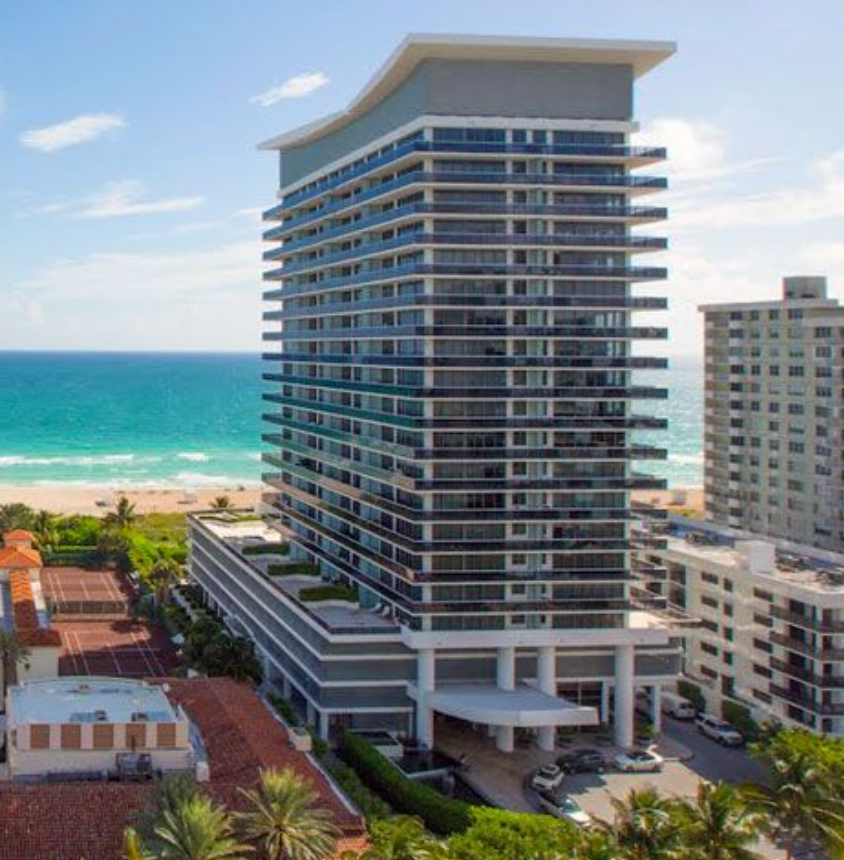
What to Read Before You Offer on a Miami Condominium
Most of what determines whether a Miami condominium purchase goes well is knowable before you offer. It is written down, it is available, and it is routinely read two weeks later during the inspection period - by which point the negotiating leverage has already been spent.
A condominium purchase is a share of an association as much as it is a residence. The association's finances follow you, they are not negotiable after closing, and they are the single largest source of unpleasant surprises on this coastline.
The reserve study
Florida's post-2021 legislation on structural inspections and reserve funding requires certain buildings to fund reserves they were previously allowed to waive. Where that funding was deferred, it now arrives - as a higher monthly assessment, or as a special assessment with a number attached to your unit.
The reserve study tells you what the building expects to spend and what it currently holds against it. A fully funded reserve on an older building is a sign of an association that has been doing the work. A thin reserve on a building facing a milestone inspection is a bill that has not been sent yet.
"Fully funded" is not a compliment paid to a large bank balance. It means the reserve holds what a component's age says it should: a roof with a twenty year life, ten years old, wants about half its replacement cost set aside. Underfunded means owners will close the gap, and how they close it matters. A reserve contribution inside the monthly assessment is predictable and already in the number the listing quotes. A special assessment is a discrete sum allocated by your percentage of ownership, on the association's timetable, invisible on a listing sheet.
A pending special assessment is negotiable at offer time: the seller can pay it, escrow it or credit it, or you price it in. It becomes unnegotiable the moment you close, because you are then the owner it is levied against. Ask one further question: how current is the study. Coastal construction pricing has moved enough that an old one understates the real number.
The milestone inspection and any engineer's report
These describe the physical condition of the structure. Read what the engineer recommended and then look for what the association resolved to do about it. A recommendation with no corresponding decision in the minutes is not a resolved item; it is a pending one.
The framework runs in two stages. Phase one is a visual assessment by a licensed engineer or architect, and a clean phase one closes that cycle. If it finds signs of substantial structural deterioration, phase two follows, and phase two is invasive: testing, sampling, opening things up. Establish which stage the building is at, and whether the reserve is anywhere near what the engineer described.
An engineer recommends; only the board can act. Take the recommendations, then read forward through the minutes for a motion, a vote, a contract award. Usually some were acted on and some were never discussed. The undiscussed ones are what you are buying.
The last twelve months of board minutes
Minutes are the least glamorous document and frequently the most revealing. Litigation, insurance difficulties, a contested assessment, a resignation, a dispute with a contractor - none of that appears in a listing, and all of it appears here. Defect litigation can affect a lender's willingness to finance in the building. Carriers declining to quote, or coverage being reduced, is next year's assessment appearing early. A failed assessment vote signals both a funding problem and a board that struggles to act. Stalled contractor work gets more expensive, not less. One resignation is ordinary; several in a year is a symptom. In a newer building, look for turnover disputes with the developer, because that argument decides who pays for the first defects.
The rules you will actually live under
Leasing restrictions, minimum lease terms, pet limits, renovation approvals and what may be changed on a balcony or a facade. If the plan involves renting the property at all, the leasing rules decide whether the plan is possible before the price does.
- Minimum lease term and frequency. One lease a year on a six or twelve month minimum is common, and that is not a detail, it is the investment case.
- Tenant approval and waiting periods. Many associations screen tenants, charge to do it, and bar leasing for a period after purchase.
- Pet weight and breed limits, usually a headcount and a weight ceiling, sometimes applying to owners and not tenants.
- Renovation approval and quiet hours. Seasonal work bans in oceanfront buildings can push a renovation by half a year.
- Balconies and facade. Flooring, railings, shading and hurricane protection are governed rather than free.
- Short-term rentals, at two levels. The association is one gate, the municipality a separate one, and cities here differ sharply. Both must permit it; either can stop it.
The insurance position
Florida coastal insurance has moved sharply. What the association carries, what it costs, what the deductible is and what remains your responsibility as a unit owner are all things to establish before an offer, not after.
The master policy covers the structure and common elements, paid out of your assessment. Your HO6 covers where it stops: interior finishes, contents, liability. That line is drawn in the declaration and varies by building. Then look at the wind or named-storm deductible, often a percentage of insured value rather than a flat figure, so on a large oceanfront tower it is a very large number met by owners before the policy pays. Loss assessment coverage on your HO6 responds when that shortfall reaches you. It is inexpensive, the default limit is usually too low, and it is the piece most often missing.
The estoppel certificate and the association's package
The estoppel certificate is the association's written statement about your unit: current assessments, arrears, any special assessment already levied and its balance, transfer fees, any claimed violation, and whether the association holds a right of first refusal. With it comes the documents package: declaration, bylaws, rules, budget, financials and the reserve and inspection material above.
The association has a statutory window to produce it and generally uses all of it, while your inspection period runs the whole time. Request everything the day the contract is signed, and extend the inspection period rather than let it expire against documents nobody has read.
What to ask that the documents do not answer
Documents record decisions. They are poor at describing direction. A short conversation with the property manager, or a board member the seller can introduce, fills the gap. How many units are delinquent, given that every dollar an owner does not pay is made up by the owners who do. Is a special assessment under discussion, which appears nowhere in the paperwork. And what is the owner-occupancy ratio.
The last two matter to your lender as much as to you. Financing here is underwritten against the building as well as the borrower, and low owner-occupancy, high delinquency or active litigation can each make a building hard to finance. That decides who can buy from you later.
Where this matters most on this coastline
The buildings where these documents differ most are the ones with the most inventory. Sunny Isles Beach is almost entirely condominium and spans several construction eras, so two towers a block apart can sit in very different financial positions. Miami Beach covers everything from restored Art Deco buildings in South Beach to new oceanfront towers on the Collins corridor, and the age of the structure tends to predict how much of this reading matters. Bal Harbour has a small number of oceanfront buildings where the association documents are frequently the deciding factor between two similar residences.
In each case the work is the same: read the association before the residence, because the residence is the part you can change. If you are still narrowing the list, our neighborhood pages and the condominium overview are the place to start.
Why timing matters more than the reading
All of this is available to a buyer during the inspection period, which is why most buyers read it then. The difficulty is that the price is already agreed by that point. Read the same documents before the offer, and what you learn goes into the number - or into the decision not to make one.
That conversion is the whole point. An assessment found in week three is a reason to renegotiate, and renegotiating from a signed contract is an argument you can lose. Found before the offer it is simply an input: it comes off the price, becomes a credit written in from the start, or tells you this is not the building. That takes no talent for negotiation, only reading a week earlier than everyone else.
Working through association documents on specific buildings is a large part of what we do for buyers here. If you are considering a particular building, send the address and we will start there rather than at another showing. The direct line is (786) 246-2068, or you can reach us here.
More on these markets: Miami Beach condos for sale · Sunny Isles Beach condos for sale · Bal Harbour homes for sale