
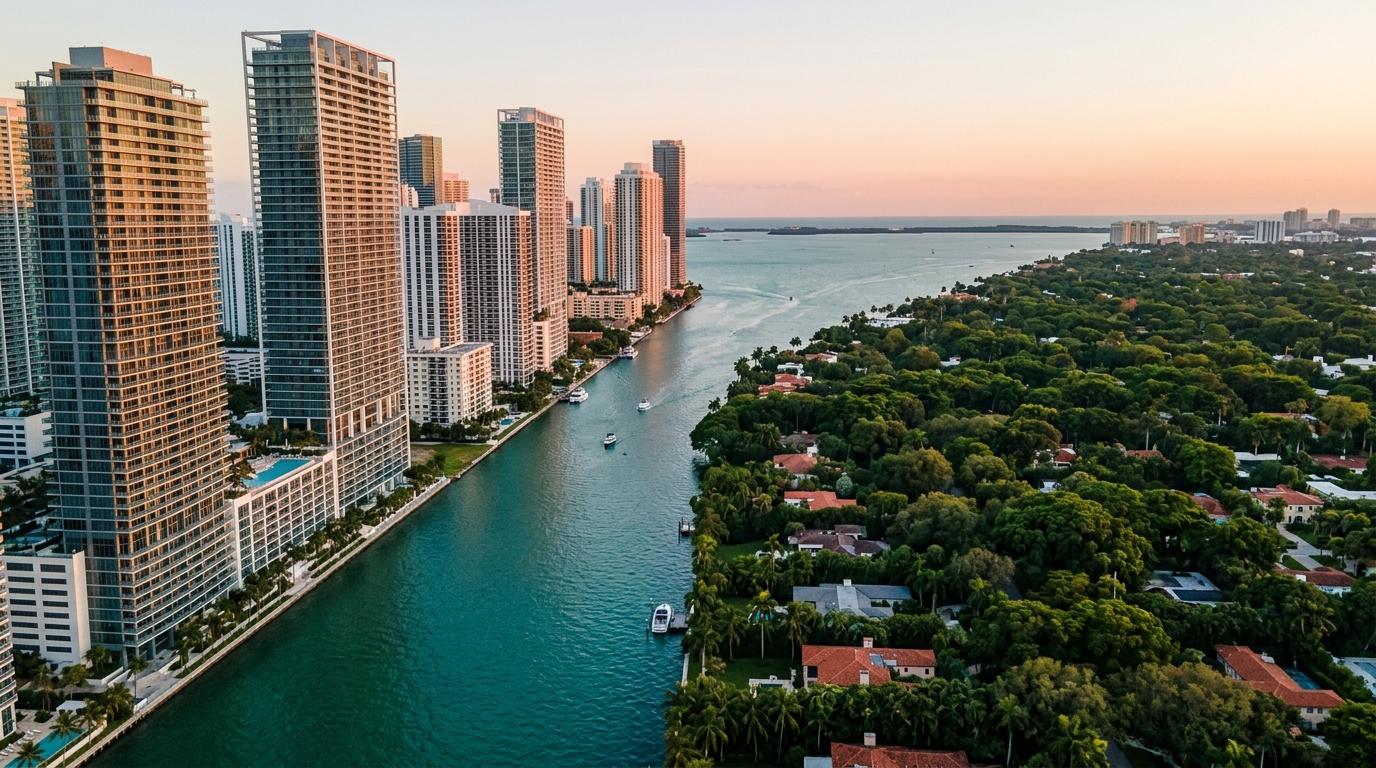
Single-Family vs. Condo: A 2026 Miami Investment Analysis for Luxury Buyers
Single-Family vs. Condo: Which Miami Luxury Investment Delivers More in 2026?
In 2026, Miami luxury buyers choosing between a single-family home and a pre-construction condominium face meaningfully different risk profiles, return structures, and lifestyle trade-offs. Condos in new Sunny Isles and Brickell towers offer developer financing incentives and rapid appreciation during the construction window, while single-family homes in Coral Gables, Bay Harbor Islands, and Golden Beach deliver land scarcity value and uncapped rental upside. The right choice depends on your hold period, tax strategy, and tolerance for construction-phase risk.
The State of Miami's New Construction Pipeline in 2026
Miami-Dade's luxury development pipeline entering 2026 remains one of the most active in North America. Sunny Isles Beach continues absorbing ultra-luxury condo towers targeting the $2M–$15M range, with several projects currently in pre-construction or early vertical construction. Meanwhile, waterfront single-family teardowns in Bay Harbor Islands and North Miami Beach are trading at land values above $800 per square foot of lot area, reflecting how scarce buildable waterfront lots have become.
Nationally, rising construction costs have slowed spec-home starts, but Miami's foreign capital inflows, particularly from Latin America and Europe, have kept luxury groundbreakings on pace. The practical consequence for investors: pre-construction condo reservation agreements are still being signed with 10%–20% deposits at contract, with the remaining balance due at closing 24–48 months later. That structure creates a leverage dynamic you cannot replicate when purchasing an existing single-family home at today's prices.
Pre-Construction Condos: The Case for Miami's New Towers
Buying into a Miami pre-construction condo before the building tops off locks in today's price per square foot while the project appreciates through construction milestones. In prior cycles, buyers who contracted at pre-construction pricing in Sunny Isles towers saw assignment values rise 15%–30% before a single resident moved in, though past performance in any cycle does not guarantee identical results in 2026's interest rate environment.
The mechanics work as follows. A developer launches sales at a contracted price per square foot. Early buyers in the first 20%–30% of released units typically receive the lowest pricing. As the building sells out and construction progresses, the developer raises list prices on remaining inventory. A buyer who contracted at the launch price and sells their unit via assignment at 90% construction completion captures that spread without ever closing on the property, avoiding transfer taxes in some structures.
Beyond assignment strategy, finished condos in the best new condo buildings in Miami 2026 carry hotel-style amenities: beach club access, private restaurants, concierge, and managed rental programs. Buildings with a licensed rental program on-site allow owners to participate in short-term rental revenue during periods of non-use, which is a structural income advantage a single-family home in a residential neighborhood cannot legally replicate in most Miami-Dade municipalities.
The risks are real and specific. Condo associations levy monthly fees that in luxury towers frequently run $2,500–$6,000 per month for larger units. Special assessments for capital improvements are common in older buildings and can emerge unexpectedly even in newer ones. Pre-construction deposits are exposed to developer insolvency risk for the full construction period, making escrow protections and developer capitalization a due-diligence priority, not an afterthought.
Single-Family Homes: The Case for Land, Privacy, and Control
A luxury single-family home in Miami-Dade gives an investor something no condo can: fee-simple land ownership in a market where developable waterfront and near-waterfront lots are functionally finite. In neighborhoods like Coral Gables, the Cocoplum and Old Cutler Road corridors have not seen meaningful net additions to the housing stock in years. Scarcity like this produces appreciation that is more insulated from cyclical developer oversupply.
From an income perspective, a single-family home in an area zoned for short-term rentals, or even long-term luxury leases at $15,000–$40,000 per month, carries no HOA restriction on tenant selection, lease length, or interior modifications. Investors who furnish and professionally manage a waterfront single-family home in Surfside or Golden Beach frequently achieve gross annual rental yields of 4%–6% on purchase price, before financing costs. That compares favorably to condo net yields once HOA fees are subtracted.
Tax treatment is another concrete advantage. Single-family homes qualify for the full suite of IRS Section 121 exclusions on primary residences and, when held as investment property, for depreciation schedules that include both the structure and any improvements. A condo qualifies for the same schedules, but the common-area depreciation flows through the HOA rather than to the individual owner, which reduces the depreciable basis available to you personally.
The constraint for single-family buyers in 2026 is entry price and liquidity. Trophy waterfront homes in Golden Beach and Bay Harbor Islands regularly list above $10M and can take 90–180 days to find a qualified buyer in any given market condition. Condos in a well-branded tower maintain a broader buyer pool globally, because foreign investors are far more likely to purchase a unit in a recognizable tower than to buy an individual residence they have never visited.
Side-by-Side: Single-Family vs. Condo for Miami Luxury Investment
| Factor | Pre-Construction Condo | Single-Family Home |
|---|---|---|
| Typical entry price (luxury tier) | $1.5M–$10M+ | $3M–$20M+ |
| Initial capital required at contract | 10%–20% deposit, balance at closing | Full purchase price at closing or standard financing |
| Ongoing holding cost | HOA fees $2,500–$6,000/mo + taxes | Insurance, taxes, maintenance (no HOA cap) |
| Rental income flexibility | Subject to HOA rules; hotel programs available | Full control; short-term rental where zoning allows |
| Liquidity (resale speed) | Broader global buyer pool; faster | Narrower buyer pool; 90–180 days typical |
| Land appreciation upside | None (you own air rights, not land) | Direct; finite supply drives long-term value |
| Construction-phase risk | Developer insolvency, delays, deposit exposure | None on existing homes; present on new builds |
| Short-term appreciation mechanism | Assignment sales during construction window | Market appreciation; renovation-driven value-add |
How to Choose: A Framework for 2026 Miami Buyers
Your hold period is the single most decisive variable. If you are investing with a 2–4 year horizon, a pre-construction condo in one of the best new condo buildings in Miami in 2026 offers the assignment arbitrage opportunity that single-family homes cannot. If your horizon is 7–15 years, the land scarcity premium and full ownership control of a single-family home historically compounds at a rate that outperforms condo appreciation net of fees.
Capital available at signing also shapes the decision. A buyer who has $3M liquid but wants $10M in real estate exposure gains more leverage through a pre-construction condo deposit structure than through a single-family purchase, where the full equity must be deployed at closing regardless of financing. This is why investing in new construction in Miami remains the preferred entry point for international buyers managing capital across multiple markets simultaneously.
Risk tolerance around developer execution is non-negotiable to assess honestly. The best pre-construction projects are backed by capitalized developers with completed Miami towers in their portfolio. Reviewing a developer's prior delivery record, reviewing the escrow structure, and having a real estate attorney examine the purchase agreement before signing are not optional steps for any deposit above $500,000.
Finally, consider your intended use. If you plan to occupy the property seasonally, the amenity stack of a luxury condo, full-service concierge, security, and on-site management, removes operational burden that a single-family home owner must either manage or outsource. If you want a property that accommodates extended family, that can be renovated to your exact specification, and that carries the privacy of a gated estate, no condo structure delivers that experience.
Working with a Luxury Real Estate Advisor on New Miami Developments
Access to the best pre-construction pricing in Sunny Isles and across Miami-Dade is not uniformly available through public listing platforms. Developers allocate priority pricing and floor plan selection to brokerages with established volume relationships. An advisor embedded in the Miami luxury market will know which new developments in Sunny Isles are in soft launch, which buildings have developer-funded closing cost incentives, and which towers have oversold certain unit types, creating post-contract assignment opportunities below developer list price.
For single-family buyers, off-market access matters equally. A significant share of trophy waterfront transactions in Golden Beach, Bay Harbor Islands, and Coral Gables never appear on MLS. They transfer through direct broker relationships with owners who prefer discretion over exposure. Working with a broker who operates at that level is not a luxury, it is a structural advantage that affects your acquisition price from day one.
Single-Family vs. Condo Miami Investment FAQ
What is the advantage of buying a Miami pre-construction condo before the building is complete?
Buyers who contract at launch pricing lock in a price per square foot that is typically 10%–25% below what the same unit will trade for at certificate of occupancy. During the construction window, buyers can sell their contract via assignment, capturing the appreciation without ever taking title or paying full transfer costs.
Which Miami neighborhoods have the best new condo buildings in 2026?
Sunny Isles Beach, Brickell, and Edgewater lead the 2026 pipeline for luxury condo construction. Sunny Isles concentrates the ultra-luxury oceanfront segment above $2,500 per square foot, while Brickell and Edgewater offer lower price-per-foot entry points with strong rental demand from the professional residential base.
Are HOA fees negotiable on Miami luxury condos?
HOA fees in pre-construction buildings are set by the developer's budget projections and become fixed once the condo association is formally established. They are not individually negotiable. Buyers should model the full carrying cost, including HOA, property taxes, and insurance, before committing to a purchase.
Can foreign nationals buy pre-construction condos in Miami?
Yes. Foreign nationals face no ownership restrictions on Miami condominium purchases. They are subject to FIRPTA withholding requirements upon resale and should work with a U.S. tax attorney to structure ownership, often through an LLC or trust, to optimize estate and income tax treatment from the outset.
How does single-family home appreciation in Miami compare to condo appreciation over a 10-year hold?
Over long hold periods, waterfront and near-waterfront single-family homes in scarce Miami-Dade submarkets have historically outperformed condo appreciation on a net basis after HOA fees are subtracted. The 2015–2025 decade saw waterfront single-family values in Bay Harbor Islands and Golden Beach more than double, while condo appreciation in the same period varied significantly by building quality and submarket, with some towers experiencing flat or negative net returns after fee escalation.