
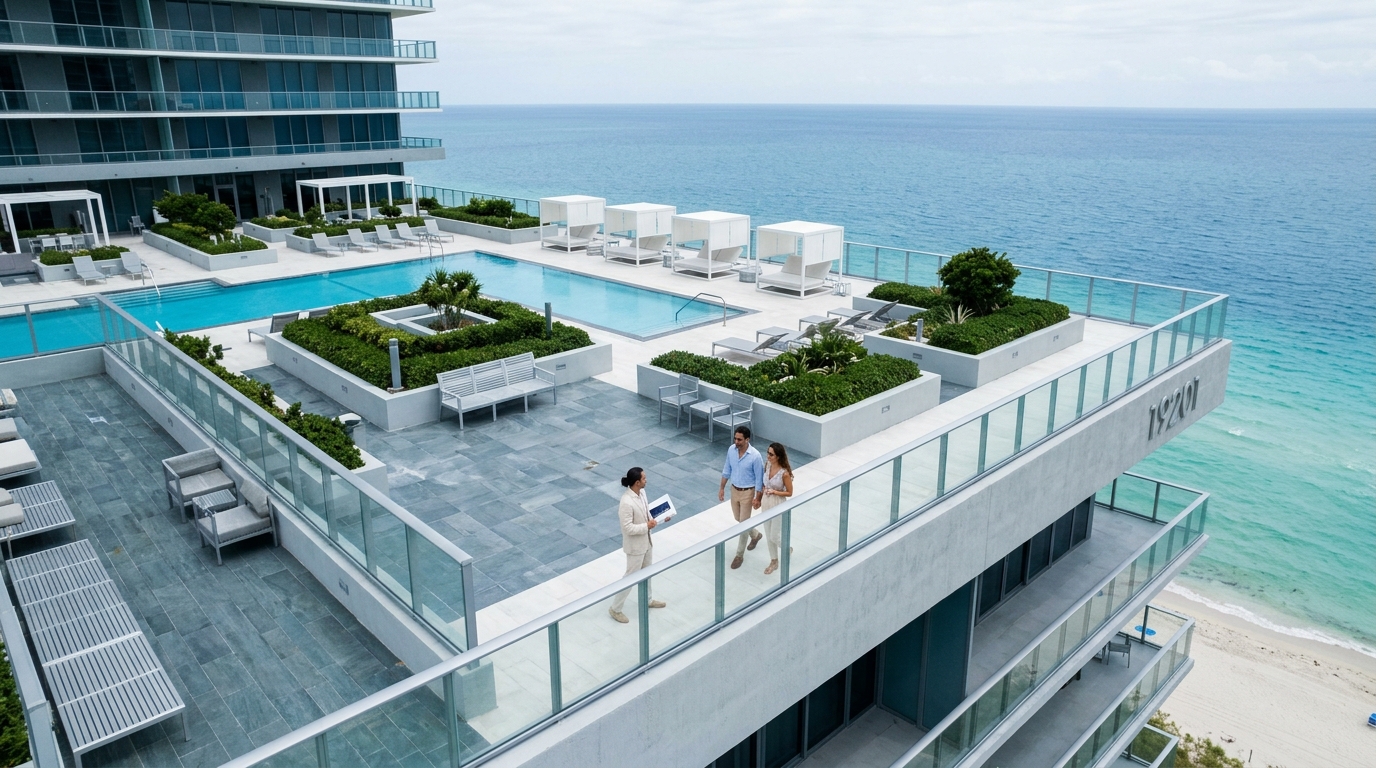
The International Buyer's Guide to Purchasing Miami Real Estate in 2026
Miami Luxury Real Estate in 2026: What International Buyers Need to Know Before Closing
International buyers purchasing Miami luxury real estate in 2026 face a defined sequence of financial and procedural steps: securing financing or proof of funds, submitting a competitive offer, completing due diligence, and closing with full awareness of Miami-Dade's closing cost structure. This guide walks through each stage with the specificity needed to act, not just plan.
Step 1: Establish Your Financing Before You Tour
Miami's luxury market moves quickly, and sellers of significant properties accept offers from buyers who have already resolved their capital position. For international buyers, that means one of two paths: an all-cash purchase with a verifiable proof-of-funds letter from a recognized financial institution, or a pre-approved jumbo loan from a lender who actively works with foreign nationals.
Jumbo loans in Florida in 2026 apply to any loan amount exceeding the conforming loan limit. For Miami-Dade County, that threshold currently sits at $806,500, meaning virtually every luxury transaction in Bal Harbour, Sunny Isles Beach, or Coconut Grove will involve non-conforming financing. Foreign national jumbo loan programs typically require a 30%–40% down payment, 12–24 months of documented bank statements or asset statements translated into English, a valid passport, and a U.S. credit history or a letter of reference from an international bank. Some lenders accept DSCR (Debt Service Coverage Ratio) structures for investment properties, where the property's projected rental income qualifies the loan instead of personal income documentation.
Interest rates on foreign national jumbo loans carry a premium over conventional rates, typically 0.5–1.25 percentage points higher, because lenders price in the added documentation complexity and cross-border asset verification. Buyers should obtain written pre-approval letters, not pre-qualification estimates, before making any offer. A pre-approval letter confirms that the lender has reviewed income, assets, and credit, making it meaningfully stronger than a preliminary estimate.
Buyers using international wire transfers to fund a cash purchase should initiate currency conversion and wire routing at least 10–15 business days before the expected closing date. U.S. banks apply additional compliance holds on large international wires, and title companies require cleared funds, not pending transfers, at closing.
Step 2: Structure a Competitive Offer on a Miami Luxury Home
Making an offer on a Miami home in the luxury segment involves more than naming a price. The offer package communicates financial credibility, seriousness, and the buyer's understanding of local norms. A well-constructed offer includes the purchase price, proposed closing timeline, earnest money deposit amount, inspection and financing contingencies, and the pre-approval letter or proof of funds.
Earnest money deposits in Miami-Dade's luxury market typically run 10% of the purchase price, held in escrow by a licensed title company. On a $5 million property, that means $500,000 tied up from the moment the contract is executed. Some sellers of highly sought waterfront or preconstruction properties require 20% deposits structured in tranches, particularly when the property is not yet delivered. Buyers should confirm escrow terms and deposit protection language before signing.
Contingency periods are negotiated, not fixed. A standard residential contract in Florida allows for a 10-day inspection period, but luxury buyers frequently negotiate 15 days to allow time for specialist inspections: structural engineering, mold assessment, seawall integrity for waterfront homes, and roof certification. Waiving inspection contingencies entirely to strengthen an offer is a high-risk strategy in Miami, where properties face salt air corrosion, hurricane exposure, and in older buildings, deferred maintenance that only a licensed inspector will identify.
Financing contingencies protect buyers if their loan does not close, but they also create friction for sellers who prefer cash or already-financed buyers. A buyer with a strong jumbo pre-approval from a recognizable lender can often retain a financing contingency without losing the offer, particularly if the pre-approval letter specifies the exact property address and loan amount.
Step 3: Due Diligence on Miami Luxury Properties
The inspection period is the buyer's opportunity to make fully informed decisions, not to renegotiate price without cause. In Miami-Dade County, due diligence on a luxury property covers several layers.
For single-family homes, a licensed general home inspector provides the baseline assessment. Buyers of waterfront properties should separately retain a marine engineer to inspect docks, seawalls, and pilings. Wood rot, concrete spalling, and seawall displacement are common on properties that were not maintained under a regular saltwater exposure protocol. Repair costs for a compromised seawall can exceed $150,000, and this finding justifies a price renegotiation or seller credit.
For condominium purchases in towers like those along Collins Avenue in Bal Harbour or the oceanfront buildings in Sunny Isles Beach, due diligence shifts to the association's financial health. Florida law requires sellers to provide condo documents within 3 days of an executed contract, and buyers have 3 days after receipt to cancel for any reason. Review the most recent reserve study, the association's current reserve funding percentage, any pending special assessments, and the status of the building's 40-year recertification (or 30-year for buildings within 3 miles of the coast, under Florida's updated structural inspection requirements). Buildings with underfunded reserves or unresolved structural findings carry real financial risk beyond the purchase price.
Title searches in Florida are conducted by the title company. The search confirms that the seller holds clear title and reveals any liens, easements, code violations, or open permits attached to the property. Open permits, meaning construction work that was completed but never inspected and closed by the municipality, transfer with the property. Buyers should require sellers to close all open permits before closing or escrow funds sufficient to resolve them post-closing.
Step 4: Understanding Real Estate Closing Costs in Miami-Dade
Closing costs in Miami-Dade are structured differently from many markets internationally, and the buyer versus seller allocation follows Florida custom as well as contract negotiation. International buyers consistently underestimate total acquisition costs when they budget only for the purchase price.
| Cost Item | Typical Payer | Approximate Amount |
|---|---|---|
| Documentary Stamp Tax on Deed | Seller | $0.70 per $100 of purchase price |
| Documentary Stamp Tax on Mortgage | Buyer | $0.35 per $100 of loan amount |
| Intangible Tax on Mortgage | Buyer | $0.002 per $1 of loan amount |
| Title Insurance (Owner's Policy) | Seller (Miami-Dade custom) | ~0.3%–0.5% of purchase price |
| Title Insurance (Lender's Policy) | Buyer | Simultaneous issue discount applies |
| Title Search and Settlement Fee | Buyer | $500–$1,500 depending on complexity |
| Loan Origination and Underwriting Fees | Buyer | 0.5%–1% of loan amount |
| Property Tax Proration | Negotiated | Based on closing date in tax year |
| HOA/Condo Transfer Fee | Buyer or Seller (varies) | $100–$2,500+ depending on association |
| Foreign Investment Withholding (FIRPTA) | Buyer withholds from Seller proceeds | 15% of gross sales price withheld |
The FIRPTA withholding row deserves direct attention for international buyers who are also eventually selling. Under the Foreign Investment in Real Property Tax Act, when a foreign seller disposes of U.S. real property, the buyer is legally required to withhold 15% of the gross sales price and remit it to the IRS. The foreign seller then files a U.S. tax return to reconcile actual capital gains against the withholding. Buyers who fail to withhold face personal liability for the tax. Working with a U.S. tax attorney who specializes in cross-border real estate transactions is essential, not optional.
Total buyer-side closing costs on a financed luxury transaction in Miami-Dade typically run 2.5%–4% of the purchase price. On a $4 million acquisition with a $2.8 million loan, a buyer should budget approximately $100,000–$160,000 in closing costs beyond the down payment.
Step 5: Closing and Post-Closing Compliance
Closings in Florida are conducted at the title company, not in a courtroom or notary office as is common in many countries. The buyer and seller may close simultaneously or separately; remote closings using a notary and overnight courier for documents are permitted and common for international buyers. Funds must be wired to the title company's escrow account and cleared before keys are released.
Post-closing, international buyers who financed through a U.S. lender must maintain U.S. bank accounts and ensure timely mortgage payments to protect their U.S. credit profile. Buyers holding property through an LLC or foreign corporation should work with a U.S. accountant to file annual FBAR and FinCEN reports if foreign accounts are involved, and to confirm that the ownership structure complies with Florida's current foreign ownership regulations, which have been subject to legislative updates since 2023.
International Buyer Miami Real Estate FAQ
Can a non-U.S. citizen get a jumbo loan to buy Miami luxury real estate?
Yes. Multiple U.S. lenders offer foreign national jumbo loan programs specifically designed for non-resident buyers. These programs typically require a 30%–40% down payment, 12–24 months of bank statements, a valid passport, and a reference letter from an international bank. DSCR loan structures are also available for investment properties.
How much earnest money is required when making an offer on a Miami home?
In Miami-Dade's luxury market, earnest money deposits are typically 10% of the purchase price, held in escrow by a licensed title company. For preconstruction or highly competitive listings, sellers sometimes require 20% structured in multiple tranches tied to construction milestones or contract dates.
What are the total closing costs for a buyer in Miami-Dade County?
Buyer-side closing costs on a financed luxury transaction in Miami-Dade typically total 2.5%–4% of the purchase price. Key line items include documentary stamp tax on the mortgage, intangible tax, lender's title insurance, loan origination fees, and title settlement charges. Cash buyers pay less because mortgage-related taxes and lender fees are eliminated.
What is FIRPTA and how does it affect international buyers in Miami?
FIRPTA (Foreign Investment in Real Property Tax Act) requires the buyer of U.S. real property from a foreign seller to withhold 15% of the gross sales price and remit it to the IRS. This withholding is the buyer's legal responsibility. International buyers who later sell their Miami property will be subject to this same withholding on the proceeds, which is then reconciled against actual capital gains through a U.S. tax return filing.
How long does the closing process take for an international buyer purchasing in Miami?
A cash purchase can close in as few as 14–21 days from executed contract, assuming clear title and no condo document review period. Financed transactions with foreign national jumbo loans typically require 45–60 days from contract to closing due to the additional documentation and underwriting review required. International wire transfers should be initiated at least 10–15 business days before the closing date to ensure cleared funds.